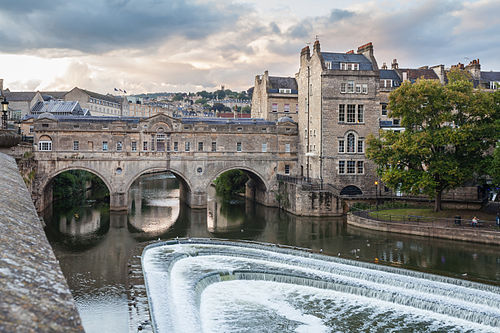
England is the largest of the four nations of the United Kingdom, and for most visitors it is where the trip starts: London first, then a train out. Eight places have their own pages here: London; Bath, Oxford and Cambridge, each a short train ride from the capital; the Cotswold villages; York in the north; the fells of the Lake District; and Cornwall at the south-western tip.
Some of England's best-known visits sit outside those places and are on the United Kingdom page: sunrise at Stonehenge, the White Cliffs of Dover, a match at Old Trafford, the puffins of the Farne Islands, Hadrian's Wall and Windsor Castle. Below are three more that are worth a day of their own: Canterbury, Stratford-upon-Avon and Liverpool.
Follow Becket's story through Canterbury Cathedral
Canterbury, Kent
2 hours, or a day trip from LondonNo booking needed
Follow Thomas Becket from the spot where four knights murdered him in 1170 to the chapel where his shrine drew pilgrims.
What it is
Canterbury Cathedral, founded by St Augustine in 597, is the seat of the Archbishop of Canterbury, and on 29 December 1170 four of Henry II's knights murdered Archbishop Thomas Becket inside it.
How to do it
Follow his story in order: the Martyrdom in the north-west transept, marked by an altar since 1986; the Romanesque crypt, which survived the fire of 1174; and the Trinity Chapel, where his shrine drew pilgrims until Henry VIII had it removed in 1538. Visitor hours are 10:00 to 17:00, last admission 16:00. Adults pay £18 from October to March and £19.50 from April to September, online or on the day, and the ticket works as an annual pass. Evensong at 17:30 is free. Trains from London St Pancras reach Canterbury West in under an hour.
Good to know
On Sundays the church opens only at 12:30.
Time needed
2 hours, or a day trip from London
Best time
A weekday from 10:00; the church opens at 12:30 on Sundays
Walk through the timber-framed house where Shakespeare grew up, then end the day at a Royal Shakespeare Company play by the river.
What it is
Stratford-upon-Avon, a market town on the River Avon in Warwickshire, is where William Shakespeare was born in 1564 and where he died in 1616, and the Shakespeare Birthplace Trust looks after the family homes. The Birthplace on Henley Street is the timber-framed house where he grew up. The Trust also runs Shakespeare's New Place, the gardens on the site of the house he bought for his family, Shakespeare's Schoolroom and Anne Hathaway's Cottage, his wife's family farmhouse in Shottery.
How to do it
Start at the Birthplace: it works on timed entry and opens daily 10:00 to 17:00, last admission 16:30. The Trust's bundle tickets add the other houses, and every ticket stays valid for 12 months. Plan the evening around a Royal Shakespeare Company performance in its theatre by the river. Chiltern Railways runs direct trains from London Marylebone, a little over two hours.
Good to know
Booking the Birthplace ahead online is cheaper.
Time needed
A full day
Best time
An early slot at the Birthplace, a play in the evening
Follow the Beatles from the Albert Dock to the Cavern Club
Liverpool
Half a day, plus an evening at the CavernNo booking needed
Trace the Beatles from childhood to solo years, then hear live music in a Cavern rebuilt with the original's bricks.
What it is
Two visits tell the Beatles story in Liverpool. The Beatles Story, in the vaults of the Royal Albert Dock, follows the four from their childhoods to the solo years. The Cavern Club on Mathew Street is where the band played 292 times between 1961 and 1963. The original cellar was filled in after it closed in 1973; today's club, opened in 1984, was rebuilt on part of the site with 15,000 of its bricks.
How to do it
The Beatles Story opens 09:00 to 17:30, until 18:30 on Saturdays, with last entry 75 minutes before closing, and adults pay £20. Then walk up to Mathew Street. At the Cavern, live music starts at 11:15 every day and runs until midnight or later; entry is £6 at the door, card only.
Good to know
Under-12s go free, and 12 to 17-year-olds may stay until 20:00 with an adult.
Stand among the sarsens in early light, inside a circle that day visitors only walk around on a path.
Salisbury station is 19 km away and the tour bus may not run early enough; a sunrise tour from London with inner-circle access takes care of the early transport.
What it is
General admission opens at 9:30, and day visitors walk a path around the stones without entering them. Dawn light among the sarsens needs the Stone Circle Experience: one-hour sessions run in the early morning or evening outside normal hours, with at most 52 people split into two groups of 26.
How to do it
Prices start at £70 for adults, and booking is open to March 2027. The other dawn option is the free managed access at the solstices; the next winter solstice is Tuesday 22 December 2026. Salisbury station is 19 km away, and the tour bus from there may not run early enough, so plan a taxi or car.
Good to know
There are no sessions in October or November. You may photograph freely but not touch or stand on the stones.
Time needed
1 hour inside the circle
Best time
Early-morning Stone Circle slot, December to September
Walk the White Cliffs of Dover to South Foreland Lighthouse
Dover, Kent
Half a day with the lighthouse walkFree
Follow the white clifftop east to a Victorian lighthouse, with Dover's port and ferries below you on the way.
What it is
From the National Trust visitor centre the classic walk runs 2 miles east along the clifftop to South Foreland Lighthouse, a Victorian light built to steer ships off the Goodwin Sands, with the port and the ferries below you on the way. On some days the Trust also runs tours of Fan Bay Deep Shelter, Second World War tunnels dug into the cliff.
How to do it
The cliff path is free to walk; the National Trust charges only for parking at its visitor centre (£6 per car). Without a car, take the high-speed train from London St Pancras to Dover Priory and follow the brown signs: about 2 miles, or a 40-minute walk with a steep climb to the cliff top.
Good to know
The car park gate locks at 19:00. Check the dates of the Fan Bay tours before you go.
Get into a Manchester United match at Old Trafford
Manchester
About 70 minutes for the stadium tourTimed entry
Watch Manchester United at home among about 74,000 people, if a membership and the ballot get you one of the seats.
What it is
Old Trafford holds about 74,000 people, but Premier League home tickets go to the club's members. Members apply for each home match and a ballot decides who gets a seat, so nothing is guaranteed. The fallback is the stadium tour, about 70 minutes, which is closed on home match days.
How to do it
A visitor's first step is buying a membership (the Official tier is £37.50 for 2026/27); check each fixture on the club's website. For the tour, arrive at the Sir Alex Ferguson Stand reception at least 20 minutes early, and see the museum before a tour that starts at 15:00 or later.
Good to know
Do not book non-refundable travel until the fixture dates around your visit are confirmed.
Step ashore on Inner Farne among the seabird colonies, at their busiest in May, June and July.
What it is
Every trip starts at Seahouses harbour, where several boat companies sail. You choose between a cruise around the islands and a trip that lands on Inner Farne. May, June and July are the peak months, when the seabird colonies are busiest; April, August and September are quieter.
How to do it
The National Trust advises booking the boat in advance. If you land, collect your boat ticket at the operator's hut, then show your membership card or buy a landing ticket at the National Trust trailer on the harbour. Seahouses car parks fill up, so leave time before your sailing.
Good to know
The Farne Islands are closed for the season and reopen on 1 April 2027. Landings can be cancelled at short notice in rough seas, and the boat company will contact you.
Best time
May to July for puffins; the islands reopen on 1 April 2027
With a week, take London plus two of Bath, Oxford and Cambridge: they are the easiest trips out of the capital, and each works as a day trip or a night away. With two weeks, add York and then either the Lake District or Cornwall. The Lakes are for walkers and lake boats, Cornwall for beaches, surf and the coast path. The Cotswolds fit between Oxford and Bath. Oxford and Cambridge overlap more than they differ, so if time is short, one of them is enough.
How to combine them
London is the hub of the rail network, so the simplest plan is a star: sleep in London and go out and back to Oxford, Cambridge, Bath or Canterbury. York is about two hours north of London King's Cross on the line to Edinburgh, so it pairs naturally with a trip to Scotland. The Lake District hangs off the West Coast line at Oxenholme and Penrith, and Cornwall lies at the far end of the line from London Paddington, with the Night Riviera sleeper overnight. Do not squeeze Cornwall and the Lakes into one short trip: they are at opposite ends of England.
Getting around
Between cities, the train is faster than driving and lands you in the centre. Inside London, Oxford, Cambridge, Bath and York a car is a burden: the centres are walkable, parking is scarce, and each city runs Park and Ride sites on its edge. The countryside is the opposite. The Cotswolds, the Lake District and Cornwall have buses, and each page says which routes work, but services are thin on Sundays, and a car saves the most time there.
When to go
May to September is the season for the fells, the coast and the gardens, with long evenings in June. Oxford and Cambridge are liveliest in term, when the college choirs sing, but exams close parts of the colleges in May and June. Cornwall and the Lake District are busiest in the English school summer holidays, from late July to early September. In winter the city museums and cathedrals carry the trip, and late November to mid-December brings Bath's Christmas Market.
Questions travellers ask
How many days do you need in England?
A week covers London and two day trips, such as Bath and Oxford. Two weeks lets you add York and either the Lake District or Cornwall without rushing. Each destination page gives its own number of days.
Should I visit Oxford or Cambridge?
Either gives you colleges, chapels, free university museums and a river; choose by route. Oxford leaves from London Paddington or Marylebone and pairs with the Cotswolds and Blenheim Palace. Cambridge leaves from King's Cross, about 45 minutes away, and pairs with punting and the meadows to Grantchester.
Do I need a car to travel around England?
Not for the cities: trains link London with Bath, Oxford, Cambridge, York and Canterbury, and a car is a burden in their centres. In the Cotswolds, the Lake District and Cornwall a car saves time, although each page lists the trains and buses that make a visit possible without one.
Which English sights should I book in advance?
The Stone Circle Experience at Stonehenge, the Roman Baths in summer, Christ Church in Oxford, Hill Top in the Lake District and the Eden Project in Cornwall all sell timed or limited tickets. In London, book the Churchill War Rooms and the free Sky Garden slots. Most cathedrals, parks and the national museums need no booking.